
Why is my tile roof leaking after heavy rain in Edison
Tile roofs rarely leak because of the tiles themselves. Here's what heavy Edison rain actually exposes, and how to stop the leak before it spreads.
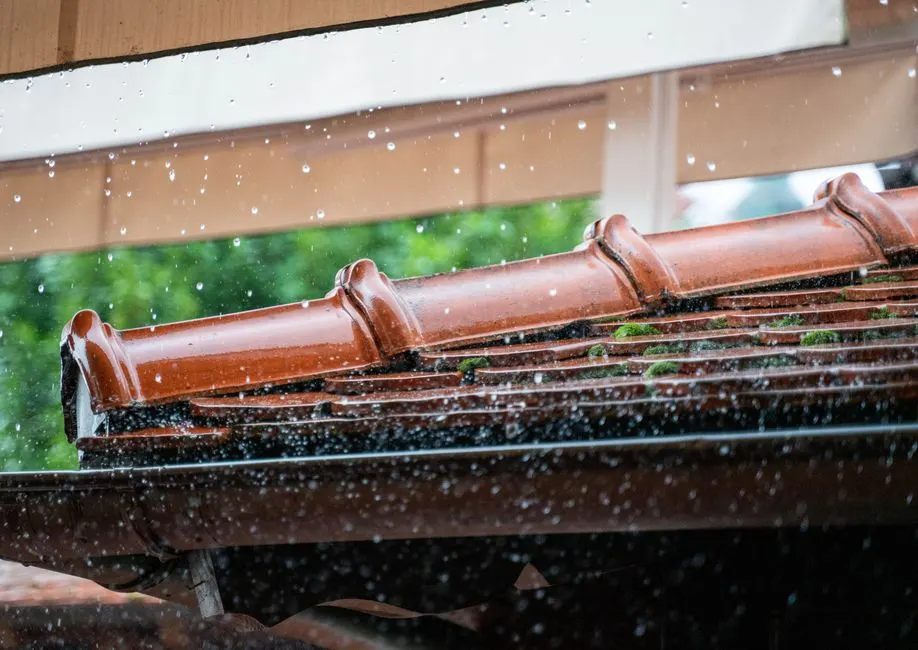
Your tile roof is leaking after heavy rain in Edison because the water is getting past the tiles and through a failure in the layers underneath them - almost never because the tiles themselves are porous. Clay and concrete tiles shed water for decades; what fails first is the underlayment, the flashing, or the seals at valleys, ridges, vents, and chimneys. That is why a roof that looks perfectly fine from the street can drip into your attic during the first real storm of the season.
Below we break down the specific failures we see across Edison, how to tell them apart, what you can safely check yourself, and when it is time to call us.
The short answer: your tiles aren't the problem
A tile roof leaking after rain in Edison New Jersey is a drainage-and-barrier problem, not a tile problem. Tile roofs are what the trade calls a double-barrier system: the tiles are the first line of defense, and the underlayment beneath them is the waterproof layer that actually keeps water out. When someone asks why their tile roof leaks, the honest answer is that the second barrier has failed somewhere.
Tile roof leak repair in Edison, New Jersey is the process of finding that failed layer - underlayment, flashing, valley metal, or a penetration seal - and restoring it without tearing off the whole roof. On most Edison homes, that is a targeted repair, not a full replacement.
The tiles still matter. A cracked, slipped, or missing tile lets water reach the underlayment far more often, and it exposes that layer to UV and freeze-thaw cycles that shorten its life. But a single cracked tile over sound underlayment usually does not leak. A field of intact tiles over brittle, 25-year-old felt absolutely will.
Why does my tile roof leak only when it rains in Edison?
Because most tile roof leaks are driven by volume and wind, not by a permanent hole. A light drizzle never delivers enough water to the failure point to show up inside. A heavy Edison storm does three things at once: it dumps 1 to 2 inches in an hour, it drives water sideways under tiles at 30 to 50 mph, and it overwhelms any place where water is already pooling or backing up.
That is why the leak seems to appear out of nowhere. The defect has been there for months. The storm is just the first event that pushed enough water through it to reach your ceiling.
Wind direction matters more than most homeowners realize. A northeast-driven rain - the kind that comes with the nor'easters that hit Middlesex County from October through March - will find leaks on the north and east faces of a roof that a summer thunderstorm never touched. If your leak only shows up in certain storms, note which direction the wind was blowing. It narrows the search fast.
The six things heavy rain exposes on Edison tile roofs
These are the failures we find most often on Edison tile roofs, roughly in order of frequency.
- Failed underlayment. Standard felt underlayment lasts 20 to 25 years under tile. Once it dries out and cracks, water that gets past the tiles goes straight through. This is the number-one cause of tile roof leaks after rain in Edison New Jersey on homes built before 2005.
- Flashing failures. Step flashing at sidewalls, headwall flashing, and chimney flashing are all metal joints that rely on sealant and correct overlap. Sealant has a 5 to 10 year service life in New Jersey's freeze-thaw climate. When it dries out, water runs straight down the wall and into the attic.
- Valley problems. Valleys carry the most water on the roof. If the valley metal is rusted through, or debris has packed the valley, water backs up under the tiles on both sides.
- Slipped and cracked tiles. A slipped tile exposes the underlayment to direct rain. A cracked tile lets water through the tile body itself. Both accelerate everything else on this list.
- Ridge and hip failures. Ridge tiles are bedded in mortar or foam. When that bedding cracks, water enters at the highest point of the roof and travels down the framing before it ever shows on a ceiling.
- Vent and penetration seals. Pipe boots, exhaust vents, and attic vents all have rubber or lead seals that crack with age. A 15-year-old pipe boot is a leak waiting for the right storm.
If you have already had one of these repaired and the leak came back, the original diagnosis missed a second failure. Tile roofs rarely have only one problem after 20 years.
What causes tile roof leaks in Edison NJ?
Edison's housing stock drives most of what we see. The township has a large concentration of 1960s through 1990s subdivisions - the split-levels and colonials around Tile Roof Replacement in Edison Center, the postwar ranches near Clara Barton, and the larger homes out toward Menlo Park. Many of those roofs are on their second or third underlayment cycle, and the original flashing is still in place.
Add the local climate. Edison sits in a region that sees roughly 45 to 50 inches of rain a year, plus 25 to 30 inches of snow, plus repeated freeze-thaw cycles from December through March. Water gets into a hairline crack, freezes overnight, expands, and widens the crack. Do that 30 times a winter and a minor flashing defect becomes an open path.
Summer adds a different stress. Attic temperatures in an unventilated Edison attic routinely hit 140 to 150 degrees. That heat cooks the underlayment from below and dries out sealants from above. A roof that survived 15 mild years can start leaking in year 16 because both barriers aged out at once.
Tree cover matters too. The mature oaks and maples common throughout the township drop debris into valleys and behind chimneys. That debris holds moisture against the roof surface and blocks drainage exactly where water needs to move fastest.
How to stop a tile roof leaking after a storm in Edison NJ
Stop the water first, then find the cause. Those are two separate jobs, and doing them in the wrong order is how small leaks become $8,000 ceiling repairs.
Step 1: Contain the water inside
Put a bucket under the drip. Move furniture and electronics. If water is running down a wall or pooling near an electrical fixture, kill the power to that room at the breaker and call us - that is an emergency, not a weekend project.
Step 2: Photograph everything
Take pictures of the ceiling stain, the attic framing, and the roof surface if it is safe to see it from a window. Water travels. A stain on the second-floor ceiling often originates 10 to 15 feet away and uphill from where it appears. Photos help us trace it.
Step 3: Do not go on the roof
Wet clay and concrete tile is the most slippery roofing surface there is. A wet tile roof is not a DIY inspection surface. Stay off it.
Step 4: Check the attic from inside
With a flashlight, look at the underside of the roof deck for dark streaks, white mineral staining, or damp insulation. Look at the chimney, the plumbing vents, and the valleys. Nine times out of ten, the entry point is visible from inside the attic even when it is invisible from outside.
Step 5: Call for a proper leak inspection
A proper inspection includes an attic-side review, a roof-side review, and - when the source is not obvious - a controlled water test. We find the leak, fix it, and test the repair before we leave. If the repair involves the waterproof layer under the tiles, that is Tile Roof Underlayment Replacement in Edison, New Jersey, and it is the single most common fix on Edison tile roofs over 20 years old.
Common mistakes homeowners make after a leak
We see the same five mistakes over and over, and each one adds cost.
- Sealing the ceiling stain and calling it fixed. The stain is a symptom. The water is still entering the roof.
- Caulking the roof from a ladder. Roofing sealant applied to a wet or dirty surface fails within one season. It also hides the real defect from whoever inspects it later.
- Replacing only the visible broken tiles. If the underlayment beneath them is already compromised, new tiles over bad underlayment leak again in the next storm.
- Waiting for a dry week. Water damage compounds. Mold can establish in 24 to 48 hours in a warm, humid attic. Every day you wait, the repair scope grows.
- Hiring the first roofer who answers. Tile roofing requires different skills and materials than asphalt shingle work. A contractor who mostly does shingles will often recommend a full tear-off because that is what they know.
The right move after a storm is a diagnosis, not a guess. If the leak is active and water is entering the living space, that is Tile Roof Emergency Repair in Edison, New Jersey territory - we tarp, stop the water, and schedule the permanent repair.
When to call a professional
Call us when any of these are true: water is reaching a ceiling, wall, or light fixture; the leak has come back after a previous repair; you can see cracked, slipped, or missing tiles from the ground; the leak appeared after a storm with wind over 40 mph; or your roof is more than 20 years old and has never had a professional inspection.
We handle the full range of tile roof problems across Edison - Tile Roof Leak Repair in Edison, New Jersey for active leaks, flashing and valley work, and full Tile Roof Replacement in Edison NJ when the underlayment is at the end of its life and repairs no longer make financial sense. One visit, one diagnosis, one clear price before we start.
Frequently Asked Questions
Why is my tile roof leaking after heavy rain in Edison?
Water is getting past the tiles and through a failed layer underneath - usually underlayment, flashing, or a valley. Tiles themselves rarely leak. On Edison homes over 20 years old, dried-out underlayment is the most common cause, followed by failed flashing sealant at chimneys and sidewalls.
How do I fix a tile roof leak after a storm in Edison New Jersey?
Contain the water inside, photograph the damage, and stay off the wet roof. Then have it inspected from both the attic and the roof surface. Most storm leaks are fixed in a single visit by replacing failed flashing or the affected section of underlayment and reinstalling the tiles.
What causes tile roof leaks in Edison NJ?
Four things dominate: underlayment that has aged past 20 to 25 years, flashing sealant that has dried out after 5 to 10 years, debris-packed valleys, and cracked or slipped tiles. Edison's 45 to 50 inches of annual rain and repeated freeze-thaw cycles accelerate all four.
Who should I call for a tile roof leak in Edison New Jersey?
Call a contractor who works on tile roofs specifically, not a general roofer. Tile repair requires matching the existing tile profile and reinstalling it correctly over new underlayment. We handle tile roof leak repair across Edison and the surrounding Middlesex County towns.
Can I just replace the broken tiles and stop the leak?
Sometimes, but only if the underlayment beneath them is still sound. If the underlayment is brittle or torn, new tiles over it will leak again in the next heavy storm. A proper inspection tells you which situation you are in before you spend money.
Get help with Tile Roof Replacement in Edison
If your tile roof is leaking after heavy rain in Edison, we will find the source, fix it, and confirm the repair holds before we leave. Call us at (732) 123 4567 and we will get a technician out to your roof.